


TeleHealth Patient Experience

Overview
TeleHealth Patient Experience was an interactive healthcare platform designed to improve patient engagement during hospitalization and better prepare patients for post-discharge care. The experience provided patients with access to healthcare plans, educational content, appointment scheduling, hospital resources, meal ordering, and discharge guidance through both in-room televisions and tablet devices.
As the sole UI & UX Designer on the project, I was responsible for designing a scalable and accessible multi-device experience that could support patients with varying levels of technical familiarity while helping healthcare providers improve communication and reduce hospital readmission rates.


The Challenge
Hospital readmissions remain a significant challenge within healthcare systems, with many patients returning within 30 days of discharge due to confusion around care plans, medications, follow-up appointments, or recovery expectations.
The platform needed to simplify access to healthcare information and empower patients to better understand and manage their care both during hospitalization and after discharge.
An additional challenge involved designing for multiple device experiences and accessibility constraints. Some hospitals were limited to in-room televisions controlled by hospital bed remotes, while others also supported tablet interactions. The experience needed to remain intuitive, consistent, and easy to navigate across both interaction models.
The Goal
The goal of the experience was to create a more engaging and supportive patient journey by:
- Improving access to healthcare information and educational resources
- Encouraging patient participation and self-advocacy
- Simplifying post-discharge preparation and follow-up planning
- Supporting multiple hospital device environments
- Reducing friction for non-technical users navigating healthcare systems
A major priority was ensuring the experience remained approachable and easy to use for patients with varying levels of technical comfort and physical limitations.
My Role
UI & UX Designer
As the sole designer on the project, I was responsible for the end-to-end user experience across multiple systems and interaction models. My responsibilities included:
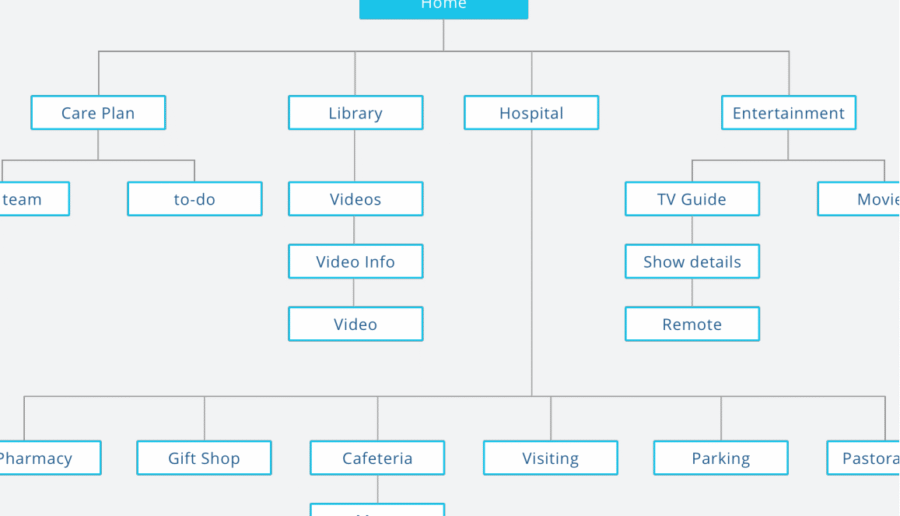
- User flows and information architecture
- Multi-device interaction design
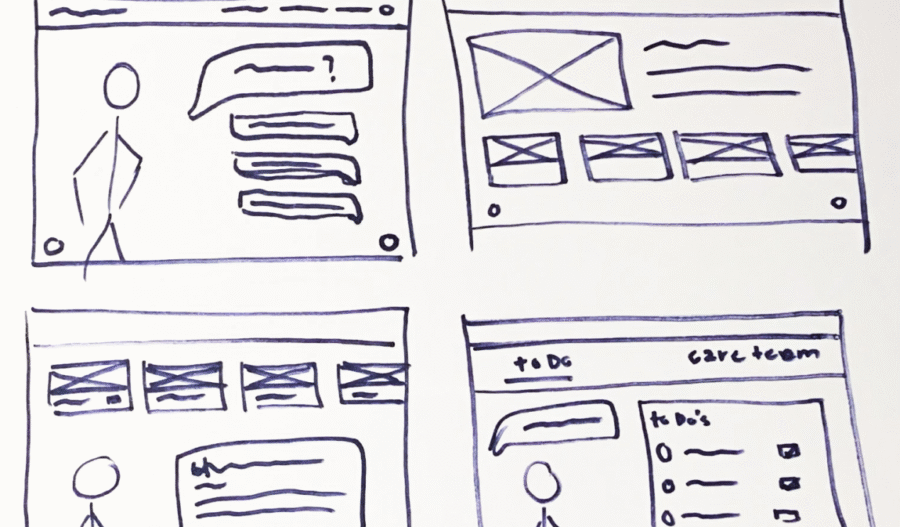
- Wireframing and prototyping
- Visual design and UI systems
- Accessibility and usability considerations
- Design system creation for development
- Collaboration with product and engineering teams
I also designed supporting patient engagement features, including a virtual nurse experience that guided patients throughout the platform through conversational interactions and contextual educational prompts.
Process & Collaboration
To support both tablet and television-based experiences, I researched interaction patterns and accessibility considerations for remote-controlled interfaces and simplified navigation systems. A major focus of the design process involved reducing complexity and minimizing the number of interactions required for patients to complete tasks.
I designed several interconnected systems within the experience, including:
- Patient healthcare plans
- Educational videos and wellness content
- Hospital information and resources
- Meal ordering functionality
- Appointment scheduling and discharge planning
- Interactive patient engagement features
Given the broad range of patient needs and device constraints, I prioritized simplified user flows, consistent navigation patterns, and scalable UI components that could adapt across multiple screen types and interaction methods.
Throughout the project, I collaborated closely with development teams to ensure the experience remained technically feasible, accessible, and cohesive across the platform ecosystem.

Outcome
The resulting experience created a more accessible and patient-centered healthcare platform that helped patients better navigate their care journey both during hospitalization and after discharge.
By simplifying interactions across televisions, remotes, and tablets, the platform improved accessibility for non-technical users while supporting broader patient engagement goals. The project also reinforced the importance of accessibility, interaction simplicity, and human-centered design within healthcare-focused digital experiences.
Tools
Sketch • Adobe Creative Suite • Prototyping Tools • Design Systems

TeleHealth Nurse
The virtual nurse is a character that helps guide the patient through the experience. Throughout the platform, the nurse will appear to check-in on the welfare of the patient by engaging in dialog. Part of the challenge was to create a few different versions of the nurse character with the existing style.


